California Needs Kelp!
Redwoods have been our state tree since 1936, poppies our state flower since 1903. It’s time to honor California’s ocean forests and all they do – from capturing carbon to providing habitat for diverse marine life, protecting coastal communities and supporting local economies.
Video shot by Pat Webster @underwaterpat
Bull Kelp and Giant Kelp Can Share the Honor of California State Kelp
Bull kelp and giant kelp form ocean forest canopies along California’s 1200-mile coastline. These kelps provide habitat for a rich array of ocean life and generate the base of the vast ocean food web. They are two extraordinary foundational species, creating two interconnected but distinct ecosystems—each confronting climate change and ecological transformation. This year’s El Niño further intensifies the pressures facing the declining kelp forests across the state. Without these forests, California’s ocean habitats would not be the same. A State kelp designation will raise awareness and support for the intensive kelp restoration efforts happening from north to south along the State’s coast.
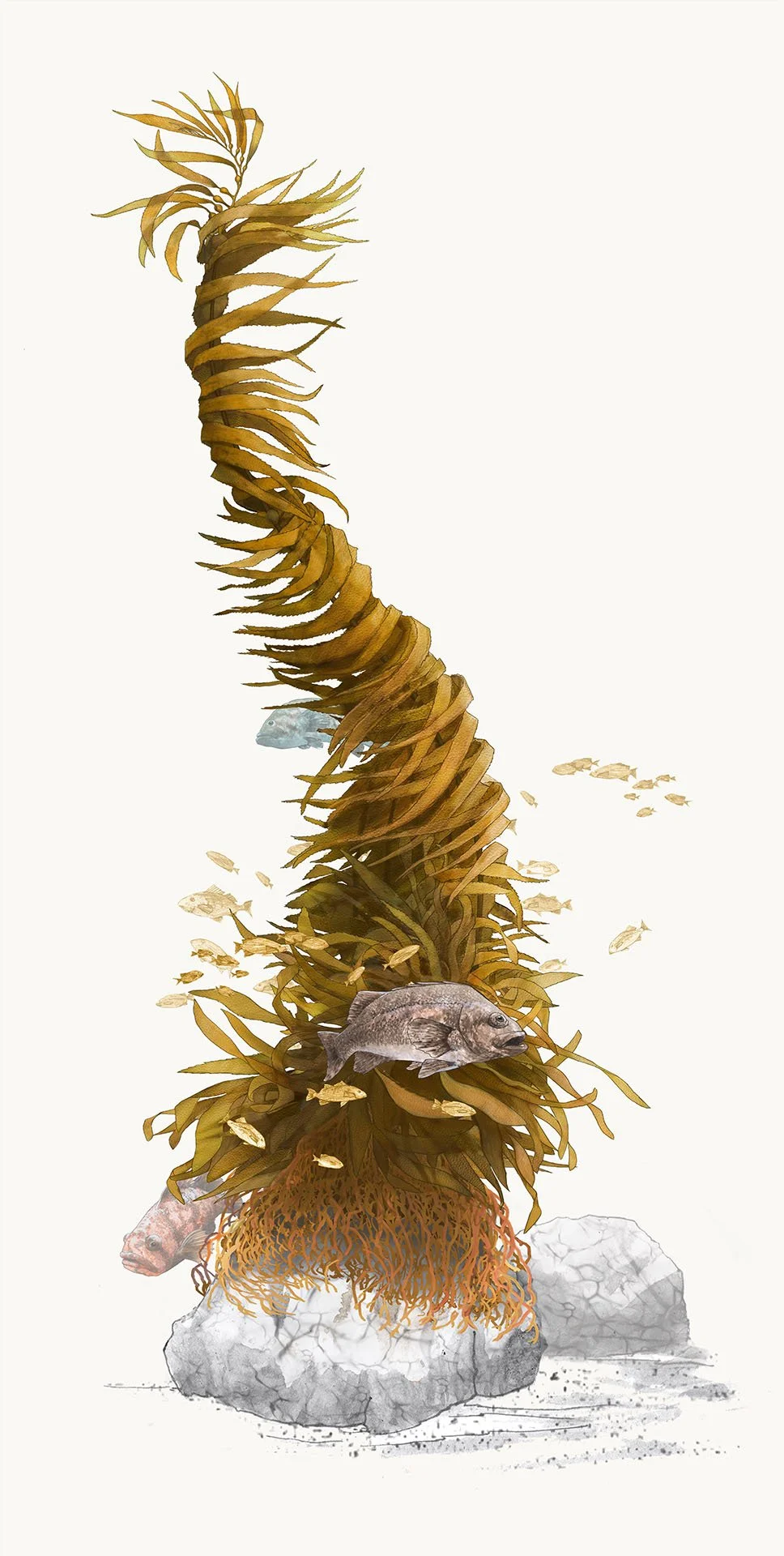
Giant kelp. Illustration by Ellen Litwiller
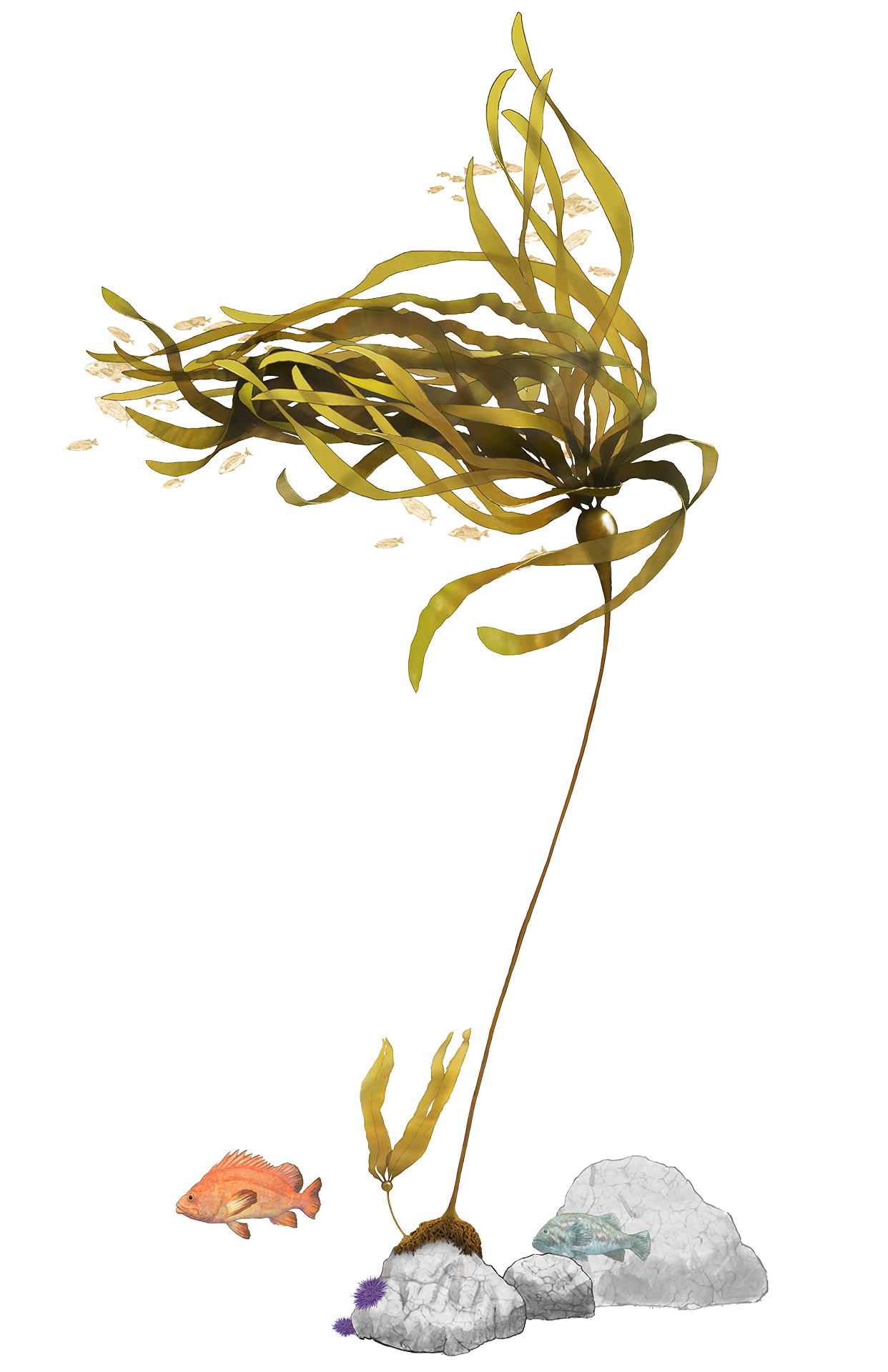
Bull kelp. Illustration by Ellen Litwiller
What’s the difference?
Giant kelp is a perennial species found from Central CA south to the border, and bull kelp is an annual species found from Central CA north. Learn more about these species at bullkelp.info and giantkelp.info. Just as coast redwoods and giant sequoias share status as our state tree, these two related kelps, with overlapping habitats, can share the mantle of state kelp. They are often called “the redwoods of the ocean”.
Our goal is to restore at least 2,000 acres of kelp forest by 2030.
– California Ocean Protection Council Strategic Plan, 2026-2030
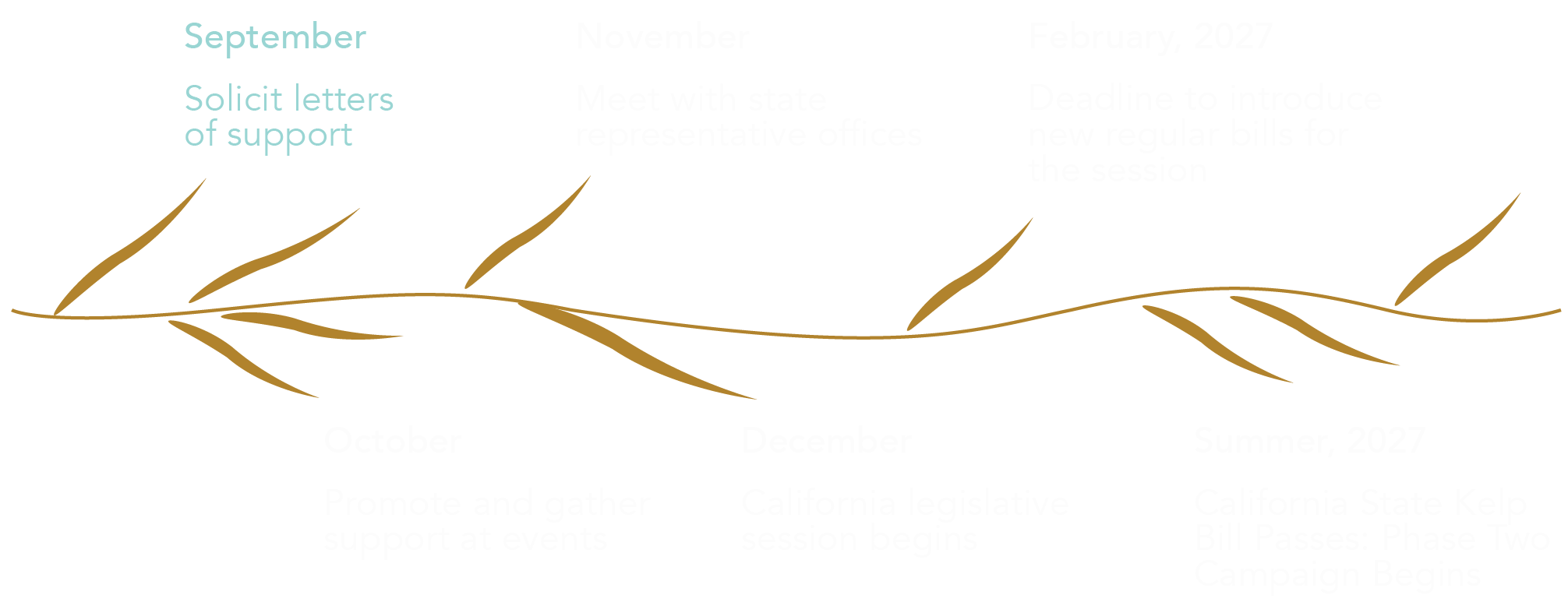
Timeline for Introducing a State Kelp Bill to the CA Legislature
Our Coalition
We are a growing group of supporters who advocate for California’s coastal ecologies through education, dive training, community engagement, restoration work, and promoting marine protection.